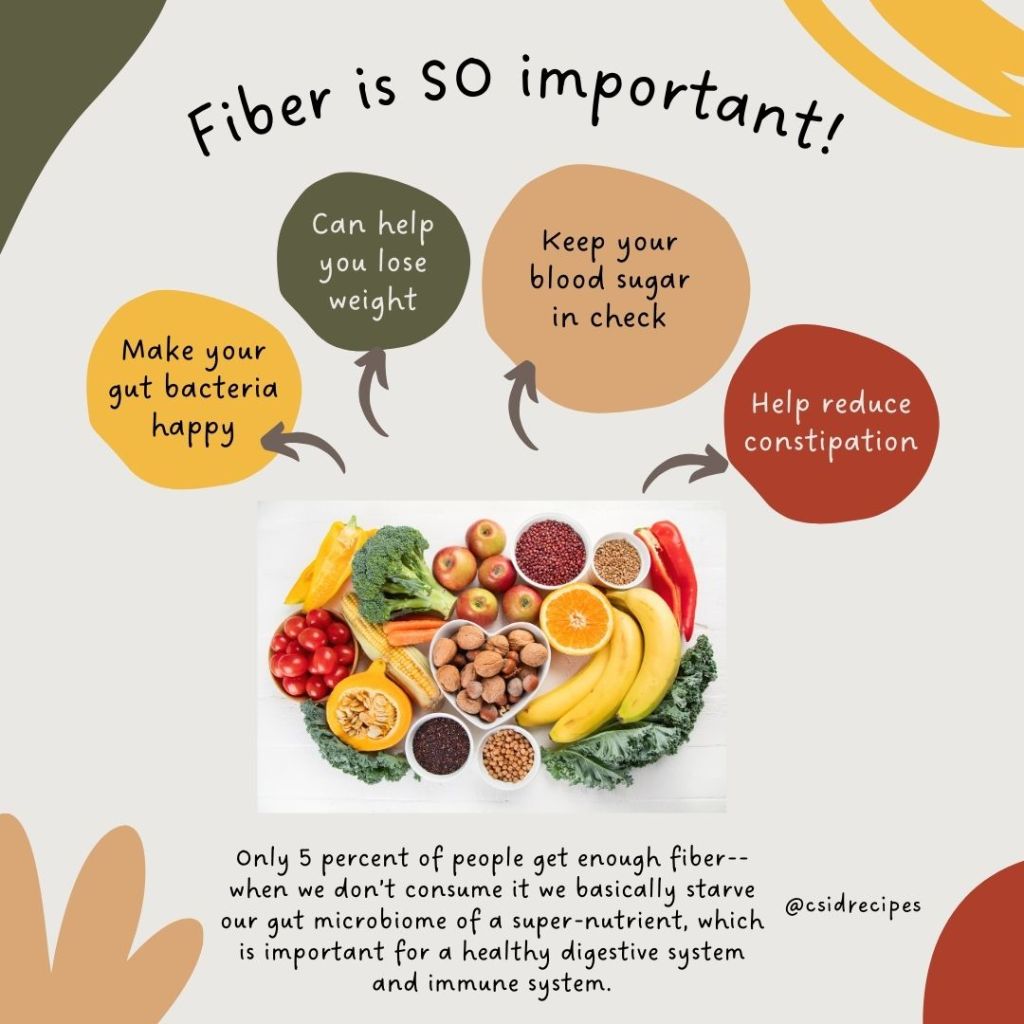
If you aren’t following news of America’s “fiber-intake gap” then you might be living under a rock, just kidding, of course! I’ve been learning a lot in my nutrition coursework at CSU about the importance of fiber and all of the roles it can play in our digestive system and overall health. One of my favorite topics is the gut microbiome and how fiber can protect it.
One of the difficulties of having to have a specialized diet where a lot of carbs are removed is that we lose out on a lot of valuable sources for fiber. These include things like bread and oats and grains since we can’t digest starches and sugars properly we have to look to other places to get the right amount. And let me tell you it’s really hard work.
Only 5 percent of Americans are getting enough fiber in their diets–which means 95 percent of us (and I include myself in the amount of people that aren’t getting enough) are losing out on the important benefits that fiber can give us. Let’s take a look at those:
- Reducing cholesterol: Fiber in the digestive tract can help reduce the body’s cholesterol absorption, especially if you take statins and use fiber supplements, such as psyllium fiber.
- Promoting a healthy weight: High fiber foods like fruits and vegetables tend to be lower in calories. Fiber can also slow digestion to help you feel fuller for longer.
- Preventing constipation: Fiber can speed up digestion and prevent constipation. Insoluble fiber adds bulk to the digestive tract, as your body doesn’t digest it. This stimulates the intestines.
- Managing blood sugar: The body takes longer to break down high fiber foods, which means glucose does not enter the bloodstream so quickly. This helps you maintain more consistent blood sugar levels.
- Reducing cancer risk: Eating enough fiber may help prevent certain cancers, including colon cancer. One reason may be that some types of fiber, such as the pectin in apples, may have antioxidant properties.
- (This list of health benefits is taken from HealthLine.)
So, why can’t we just drink Metamucil or those fiber-rich brownies and health bars? Nutrition and health experts all say fiber should be coming from all kinds of sources to really get the added benefits for your health, and even though high-fiber cereals and bars are okay in moderation–you also have to really look at and scrutinize the label because a lot of them have high amounts of fat and sugar added to them. And to make matters worse not all fibers are created equally. So what do I mean by that?
Insoluble VS. Soluble Fiber: Why Does It Matter?
The basic break down is soluble fiber easily dissolves in water and it breaks down into a gel-like substance in our colon, while insoluble fiber does not dissolve in water and is intact as food moves through our gastrointestinal tract. Both types of fiber have a lot of health benefits we need.
Soluble fiber can lower cholesterol and help with weight management, stabilize blood sugar, reduce the risk of many diseases including heart disease which is the number one cause of death in the US and it can help feed healthy gut bacteria so they live longer
Insoluble fiber can help prevent constipation which is an issue for people with gastrointestinal health issues and digestive problems like CSID, and it can also lower the risk for diverticular disease and possible colon cancer.
So now that you know how important fiber is you might be wondering what you can eat on a CSID diet that will help you get to your daily intake of between 25-30g of fiber. Don’t worry I created a quick infographic that breaks down what we can eat and how much fiber we can get from each item along with some added health benefits they provide:

These are just a few options that we can have and work for most (but not all) people on a CSID diet.
CSID is a complex diet and people have different levels and portion amounts of which they can consume certain foods. It’s always best to work with a dietician or nutritionist when learning which food works for you.
If you need resources check out the Facebook group: CSID RECIPES AND FOOD SUPPORT
Follow me on Instagram for cute photos of my dog and my kitchen science experiments:
https://www.instagram.com/csidrecipes
 Sugar and Starch Free, No Problem
Leave a comment