If you said to me five years ago that I wouldn’t be able to eat sugar without extreme GI symptoms I probably wouldn’t have believed a thing you were telling me. I have always been the kid with a hidden candy stash and any time we went to the grocery store I begged my mom for a chocolate bar as a treat.
As we begin to learn more about nutrition and health we’re finding that sugar might be a major source of GI symptoms for patients that have been diagnosed with things like IBS. According to The Celiac MD, aka Amy Burkhart she stated that some estimates suggest 1 in 5000 people have sucrose intolerance. In specific populations, it may be as high as 5%. Anyone with underlying digestive problems can develop the acquired form.
One of the first things I learned about with my CSID diagnosis was that I had a really hard time digesting sucrose–my enzymes to do so were basically non-existent which led me to go on a journey to discover everything I could learn about sucrose and sucrose intolerance.
Sugar has many different names and natural forms
Glucose. It’s widely found in a variety of foods but it’s the most common form of sugar in plants. Our body uses glucose for fuel and no matter what form of sugar we eat–it’s broken down into glucose.
Fructose. This one is commonly found in fruits, honey, and some root vegetables. It’s the sweetest of all the naturally occurring sugars and can only be metabolized by our livers. This one is typically a safe choice for people with CSID along with some of the other sugars I’ll mention.
Lactose. This one get a bad wrap but for many people with CSID lactose is an okay choice–unless you also have a lactose intolerance. Lactose is a sugar found commonly in milk and other dairy products.
Maltose. Maltose is a bit less common but is often found as the byproduct of breaking down any carbohydrates we consume–since many people with CSID have problems with carbohydrates maltose can be difficult to process as well as sucrose. It’s usually found in sprouted grains.
Galactose. I love the name of this one and it’s made up of the same elements as glucose but they’re arranged a bit differently. It’s often found in many fruits and vegetables
Sucrose. This is the one most people who are diagnosed with CSID really need to be careful with. Sucrose is made of one part glucose and one part fructose and naturally found in plants. It’s found in sugarcane and sugar beets and lurks in many fruits and vegetables, which is why those with CSID may be able to tolerate some fruit and vegetable options better than others.
So, now that we’ve broken down all of that should we explore sucrose a little bit more? I think so. If you’re at a grocery store you’ve probably picked up an item only to quickly set it back down because you recognized that it had a sweetener you couldn’t have.
Other Names for Sugar
Food manufacturers are now required to list ingredients on a food label in order by weight so that means the higher up on the ingredient list it is the more of it that is in the product. Pretty often I see a lot of items have sugar or one of the other names for sugar at the top of the list. Here are some common names for sugar you might not know:
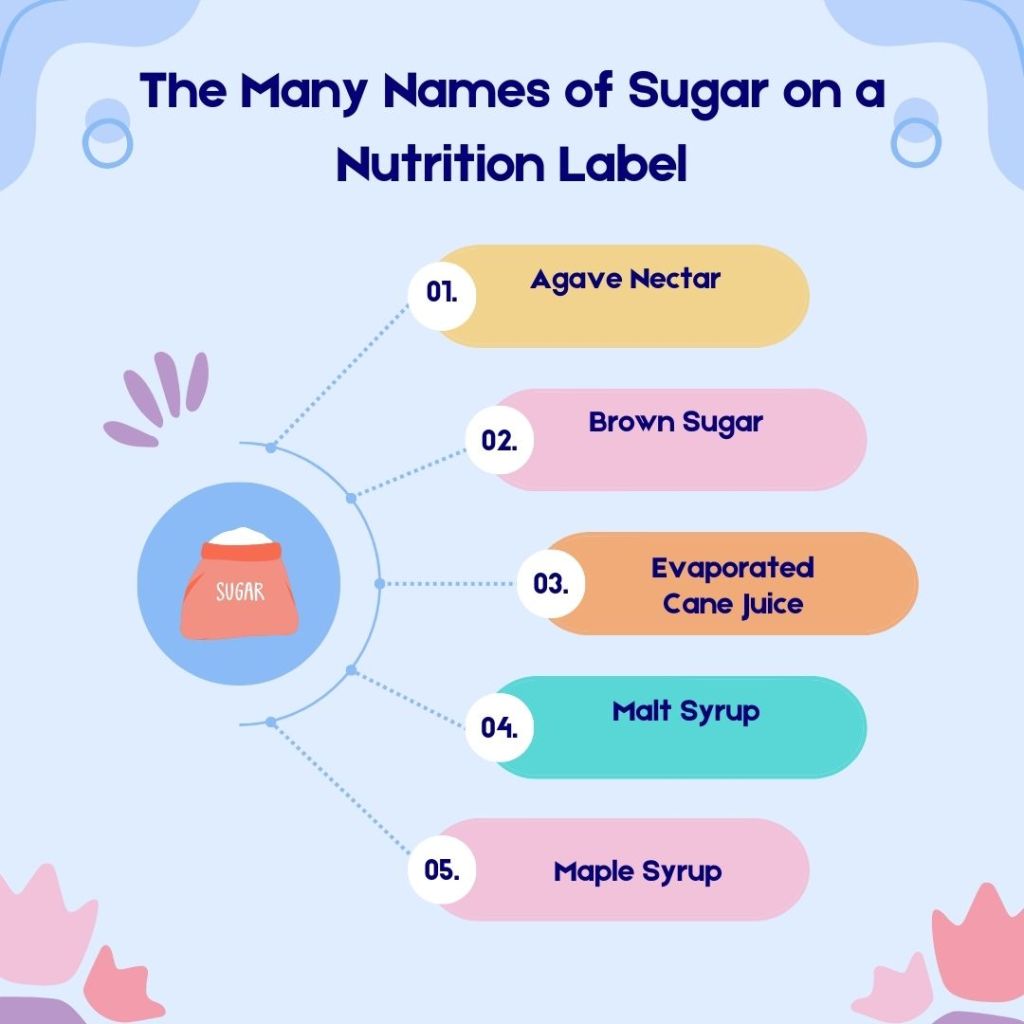
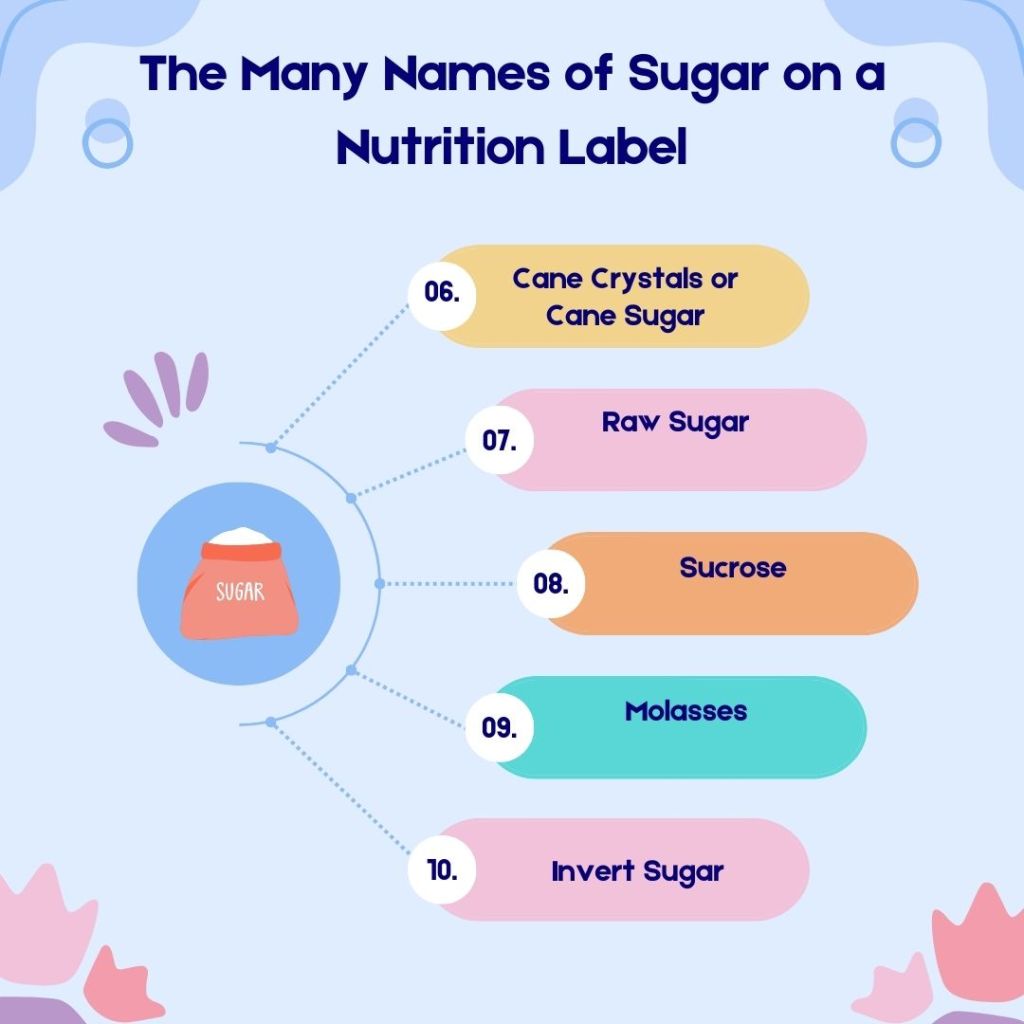
So, there you have it 10 different names of sugar to look for and be wary of on a nutrition label.
Are there any that I missed? Were you also diagnosed with one of the other intolerances with your CSID diagnosis such as fructose, glucose, or lactose intolerance? What resources do you find helpful when you’re working on a specialized diet with these intolerances?
 Sugar and Starch Free, No Problem
Leave a comment