I realized I hadn’t written a blog post in a while, but I finally got inspired to step back into the kitchen last night. We’ve been busy doing a bit of travel this summer and moving, but I’ll keep better tabs on doing more updates than I have been.
One of the cool things about travel is that it always inspires me to get in the kitchen and try things I might not usually. This is where the delicious “three-cup chicken” recipe comes into play. My husband and I were talking about where we would love to venture next, and Taiwan was high on our list. However, since we’ll probably have to wait a few years, we thought it would be fun to try out some food in our own kitchen.
Here’s a little history of the Taiwanese recipe, and you can read more at Epicurious:
The formula has remained strong in Taiwan for at least a century. The dish can be traced to Jiangxi Province in Southern China; it came to Taiwan by way of Hakka settlers who arrived there in the 18th and 19th centuries from China. There’s a legend about its origin, says Carolyn Phillips, a celebrated food writer who lived in Taiwan for eight years. According to that story, three cup chicken was invented in the late Song dynasty in 13th-century Jiangxi by a prison guard who whipped it up for an incarcerated grand chancellor, poet and politician Wen Tianxiang, just before his execution. “So many dishes have famous names attached to them,” says Phillips. “It’s hard to figure out if they’re pulling our leg or are reciting actual history.”
I love that the dish is a blend of comfort and some of my favorite flavors made in a very simple way. The history, if it is true, is super fascinating. In Taiwan, there’s actually a lot of debate on how to make it since each household has its own personal favorite way.
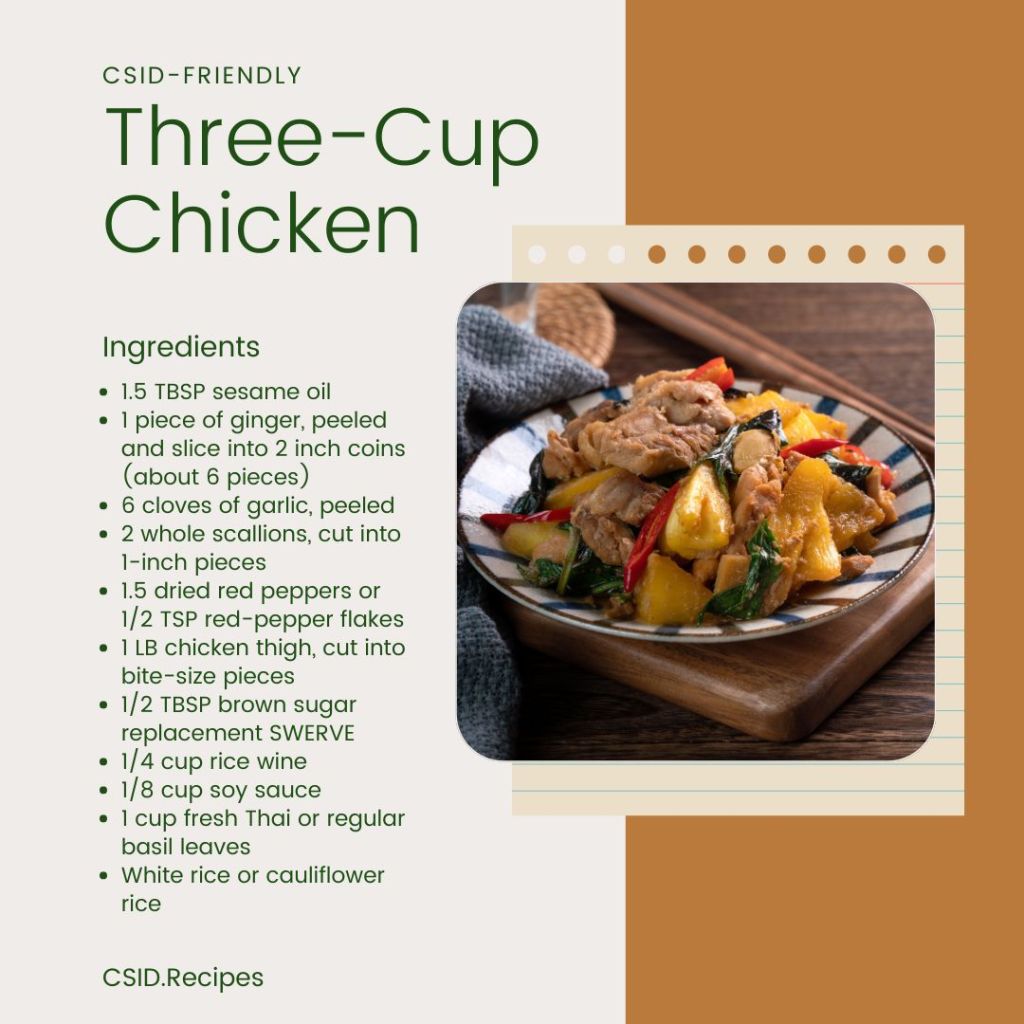
One of the important rules is that rice wine is a must in the dish—please don’t use rice vinegar because it will absolutely change the taste profile of the dish. At my local King Soopers, I was able to find it labeled as Kikkoman Manjo Aji Mirin Cooking Rice Wine. It was on the ask for assistance top shelf area with only two bottles left, so it might be a little hard to spot at first.
The other important ingredient in this dish is the dried red peppers you use. If you can find them, get the dried Szechuan Chinese Red Chili Pods since they pack the most flavor and give the dish a nice heat. You can also use red chili pepper flakes if you can’t find the dried peppers.
The third most important thing is the type of basil you use. If your store carries Thai basil, I highly recommend getting that basil for the dish. While regular basil will work, it just doesn’t taste quite the same.
As for the brown sugar substitute, I used SWERVE, but I think something like honey might be better in the next batch. And if you can’t tolerate white rice, cauliflower rice is always a great substitute for a dish like this.
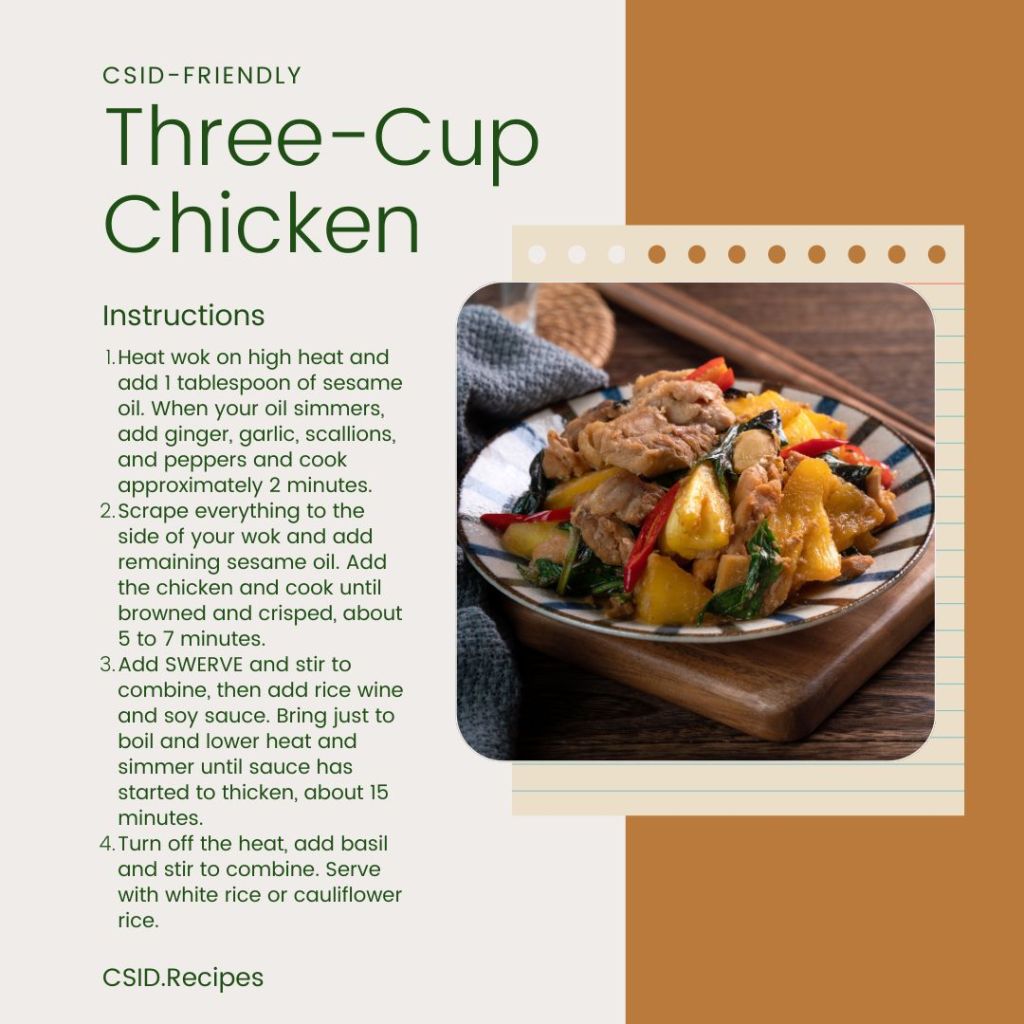
As always, don’t forget to screenshot the recipe for later and tell me your alternative methods to make it, or let me know what kind of recipe you want to see next.
 Sugar and Starch Free, No Problem
Leave a comment