
I’ve never been one to say supplements, and prescription medication isn’t great because if you’ve ever experienced 48 hours or more straight without getting a good night’s sleep–you’ll probably do just about anything to achieve it. I’m also not a doctor, and I’m not an expert in the neuroscience of sleep.
Did you know we don’t all require 8 hours of sleep?
It’s just an average amount that most people need. My bedtime usually falls between 10 and 11 pm, and I wake up between 6 and 7 am. This means I fall in the average population needing between 7 and 9 hours of sleep. So, I wrote a post about Melatonin and its associated risks. I am following up with some healthy alternatives that I’ve found especially helpful in my search for peaceful sleep.
Here are three ways I’ve changed my bedtime patterns to get adequate sleep.
Address anxiety and underlying health issues: I’ve always been an anxious individual who spends a lot of time thinking about the what-ifs, and those big, scary thoughts don’t always leave when it’s time to turn the lights out. I found that exercising a few hours before bedtime, something like yoga, cycling, or barre, really helped calm my mind down so that I could relax at bedtime. Some studies have shown that people doing high-intensity exercise less than one hour before bedtime can take longer to fall asleep and may experience poorer overall sleep quality. So, finding the right balance for your own needs if you’re going to exercise a few hours before bedtime is vital, and you may have to test out a few different strategies.
Limit screen time: I’ve learned that blue light from screens can interfere with the production of Melatonin, an important hormone for sleep regulation. I can choose a time for my phone to go into sleep mode, turning it into a boring grayscale thing I am much less interested in. Leaving my computer downstairs without access to it and putting my phone into sleep mode has also been helpful.
(I still watch TV or listen to audiobooks at night, but I limit it to only an hour so I can finish by 11 pm)
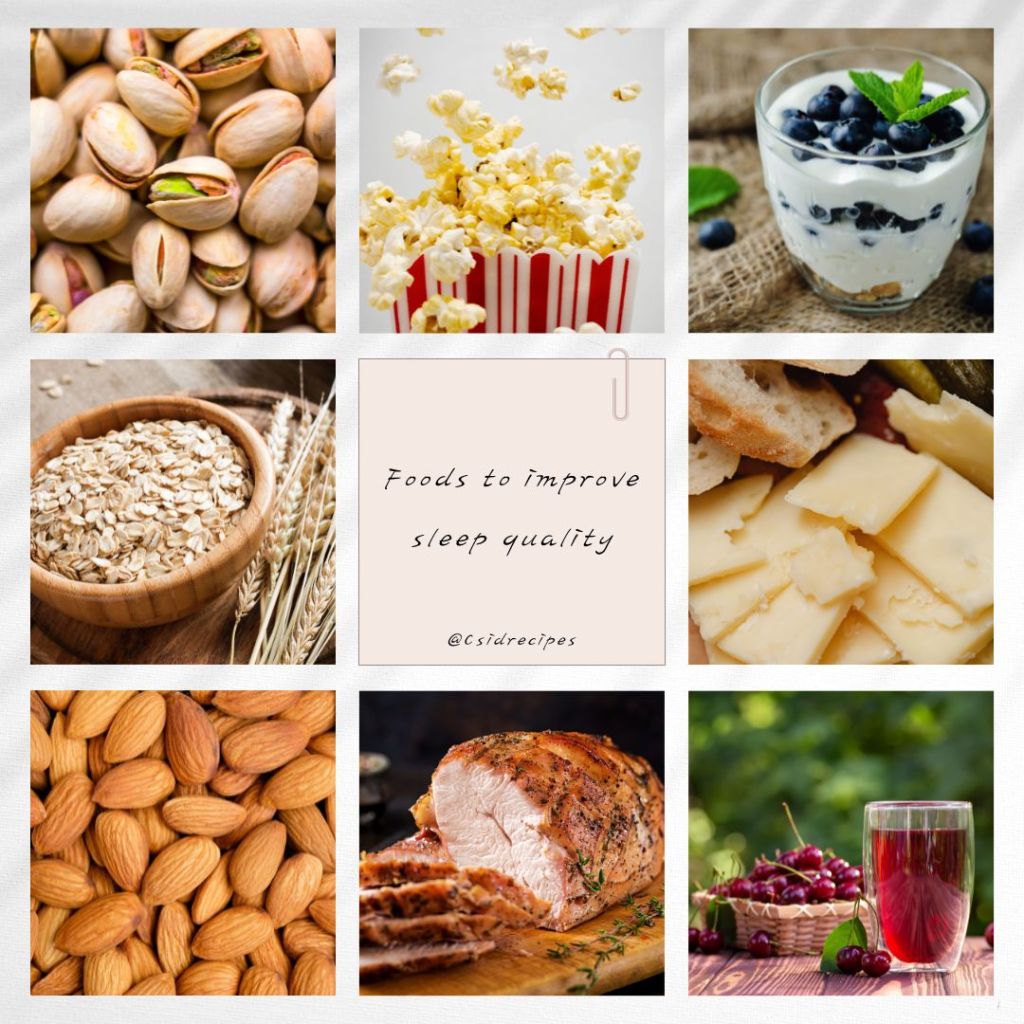
Your diet matters: The power of food and nutrition can impact every part of our day (this includes our sleep). Eating a balanced diet and avoiding heavy meals or sugary and processed junk foods late at night is essential to a good night’s rest. I’ve been doing some of my own research on the foods that make me super sleepy, and my two favorite bedtime snacks are popcorn and Greek yogurt. Popcorn is a type of whole grain packed with fiber and carbs, and the carbs make tryptophan, an amino acid necessary for sleep. It can also help us produce more Melatonin, an awesome sleep-regulating hormone. Greek yogurt also contains the sleep-inducing chemical tryptophan, which helps us produce serotonin and Melatonin, the brain chemicals we need to induce sleepiness and relaxation. On days that I’ve suffered from insomnia (which are now few and far between), I’ve had one cup of tart cherry juice (make sure there’s no added sugar) and have noticed some benefits to my sleep quality.
These were just some small changes I made in my own life that significantly impacted and improved my overall sleep quality. I found that I didn’t feel like a complete zombie the next day and my focus and attention span were way better when I was able to create a daily sleep routine that fit my lifestyle.
That being said we all have different experiences and what worked on my end might not be the right fit for you, but it did make me far less reliant on supplements and prescription drugs to get a good night’s sleep.
 Sugar and Starch Free, No Problem
Leave a comment